


Sidhu Moose Wala: A Personal Retrospective
- Aug 30, 2023
- 17 min read
Updated: Jul 13, 2025

Editor’s Note: This retrospective has gone through a lot of iterations for over a year now, being added on to, deleted, revisited, and abandoned multiple times as my life changed in major ways from one summer to the next. It may read a little disjointed, long, and all over the place, but it is supposed to represent some of the evolution of my thoughts. This piece was initially written about 1.5 months after Sidhu Moose Wala’s killing, not long after the release of his first posthumous song “SYL”, which as I mention later hit particularly hard for me due to its subject matter revolving around Sikh and Punjab civil rights. I am now looking over this and editing this piece one final time, on August 30, 2023, as I look forward to publishing my website and this piece along with it. Despite over a year passing since Sidhu’s passing and the inception of this writing, the discussion this may invoke would still ring relevant and hopefully somewhat valuable as well. This is meant to be a personal retrospective, and as such is written in that sort of tone, but maybe it can be the template for something larger.
On May 29th, 2022, I woke up to a call from my dad. I felt pretty annoyed given that he was across the hall from me in his room and I fell asleep 2 hours later than I should have. When he asked whether I had heard “what’s happening with Moose Wala'', I took a sigh and braced myself when I said no. My dad and I had went back and forth about the Punjabi singer in the years before, about whether he was a cool, no-fucks-given young artist or a wannabe gangster caught up in his own sauce. For a few reasons I’ll get into later, I’d pretty much stopped actively keeping up with his releases, and the last I really talked about him was when he joined the dreaded Indian National Congress Party to compete in the recent Punjab elections, a move that felt uncharacteristic and almost treasonous. But what my dad said next was the last thing I expected: “he was shot. He’s dead.” I just paused for a while, before asking whether it was real. After another pause my dad said “You wanna try to live like Tupac, you’re gonna go out like Tupac. Anyways your mom made bread pakora for breakfast so get out of bed.” I got ready, ate, and headed to my local gurudwara to pray and teach my Punjabi and Sikh History classes, only finding a little time to sit with friends where one of them mentioned in passing how he was planning to go to a Sidhu concert the next month. This same friend had introduced me to him years ago, and that’s when it hit me: Sidhu Moose Wala is dead.
Discovering The Artist

Let’s start from the beginning and introduce this man to the unfamiliar: Shubhdeep Singh Sidhu was born in Moosa, a village in the Mansa district of Punjab, in 1993. After graduating with a degree in electrical engineering, he moved to Brampton, an area near Toronto, Canada, as an international student. An avid fan of both Punjabi music and American hip-hop, he became involved in the burgeoning music scene there as a lyricist and released his first single, “G Wagon”, around 2017, beginning to attract attention under the name Sidhu Moose Wala, paying tribute to his hometown.
I first heard his powerful voice in early 2018 when I was visiting Surrey, British Columbia, on the other side of Canada, and another Punjabi cultural center like Brampton. I didn’t pay too much attention to the song itself, since I was 13 and more worried with how quickly I could get my parents out of this shop, but his voice and the complementing production caught my attention. At the time, I was sort of in the process of whitewashing myself musically. I abandoned the immense volumes of Punjabi music I had listened to my entire life, and I even dropped my love of hip-hop and RnB so I could fit in a little better in some of the lunch table conversations at my middle school in rural Massachusetts. It was a weird and brief phase which I quickly dropped, in part because of Sidhu. The day I flew back from Surrey I had bhangra practice (a traditional Punjabi dance) back in Boston, and during one of the breaks while my out of shape ass was struggling to catch my breath, I heard that same song I heard in Surrey playing from my friend Raunaq’s phone, and immediately felt a jolt of energy and asked him who that was. He said “it’s this new guy outta Canada” and I read what it said on his phone: “Issa Jatt - Sidhu Moosewala ft Sunny Malton and Byg Byrd.” Immediately I felt a familiar feeling of being let down by yet another Punjabi singer. Before my whitewash phase, every time I would put on a Punjabi song, I would hear a lecture from good old dad about how it was so incredibly stupid that every singer would insert the word “Jatt” into every other line of their songs and uphold a caste system that had been used to discriminate for ages. He was right: the caste system has been the cause for so many societal ills in Punjab and South Asia as a whole, and with many of the singers identifying as “Sikh”, they shouldn’t even put any value into being a Jatt, much less glorifying it. In an effort to save myself a lecture I knew was valid (those are the worst types) I ignored the song and focused on my bhangra routine. But as the days went on, I couldn’t get the infectious tune and new voice out of my head. Since the song wasn’t on Spotify yet, I even went so far as occasionally switching to the Indian app Gaana to listen to the song on the bus. As much as I knew the ills of the song, it allowed me to engage with my mother tongue in a way I hadn’t before.
A couple bhangra practices later, I heard the powerful voice again on a different instrumental, and again looked at my friend’s phone: “So High - Sidhu Moosewala prod. by Byg Byrd.” For some reason, I immediately assumed the song was about opium (feem) or something, and again walked away in an attempt to save myself from a lecture. Skipping about a year ahead, when I actually sat down and listened to the lyrics in a friend’s car, I almost laughed out loud when I realized that Sidhu had just translated the hook of “uchiyan ne gallan therey yaar diyaan” (your boy’s words are so high they fly over people’s heads) literally. Since then, I don’t think I’ve ever worked out without that song playing at some point. As more songs came out I slowly picked a few to add to my playlist like “Dollar”, “East Side Flow'', and “Jatt Da Muqabala'', all of them showcasing his bombastic voice and endearing confident swagger with lines like “Dollar wangu ni naam sadda chalda” (My name is as powerful as the dollar). He even collaborated with British rappers Stefflon Don and MIST for “47”, an absolute banger that performed very well on the UK and Canadian charts.

A still from the "47" video

From Controversies to Moosetape
As his fame grew and I began to listen more openly with my family, it became abundantly clear just how much Moosewala wrote about and glorified guns and violence. While it didn’t necessarily feel “good” in a black-and-white way, I still yelled those lyrics out in the car or while working out. They felt energetic, hard, and somewhat like a part of my culture that I hadn’t interacted with directly as much. However, I also recognized that it was glorifying something that had been disastrous in my community in as many ways as it had been empowering, and I understood why my dad would get so annoyed by it. Imagine working your whole life to stay in school, stay out of the turmoil around you in so many ways, “make it out the mud” in 2 countries, and work your way up from nothing in a different country to raise your children in a better environment, just for them to sort of glorify what you escaped. Others took issue with this too: at the time of his death he had 4 pending cases for “promoting gun culture and violence.” He got in trouble with the Akal Takht (sort of the Sikh political body) for allegedly inappropriate references to legendary Sikh warrior Mai Bhago. It was around this time that young me stopped actively following Sidhu. The gun stuff admittedly didn’t bother me too much: some of it was definitely valid, but some of it was so clearly stereotypes and media twisting around Sikhs and Punjabis being assigned to Sidhu by people who hate to see people of those groups showing any sort of powerful personal sovereignty. However, this combined with the Mai Bhago incident, along with just my life generally getting more hectic in many ways led to me not actively following Sidhu as his fame grew. I would see news about him on Instagram as he began being accepted into the Punjabi celebrity circles while slowly cultivating an international audience. Still, songs like “Trend”, “Bad”, and “Death Route” were mainstays in my playlists during quarantine and beyond with lines like “jivey jivey thuran log follow karthey, gabru nu kendiyan trend balliye” (“the way people follow me, they call your boy a trend”) and “muddh ton hi ride-or-die solo challeyaa, manggi nahion aas, naa hi takki kisey di, baapu mera hath gun de ke aakhda, putt jarrde ni lok ehe trakki kisey di” (I was ride-or-die solo from the start, never asked for help or pity from anyone, my dad put a weapon in my hand and said ‘son never let someone step out of their lane.”) His solo singles, Brown Boy collaborations, and PBX1 record shot him to the forefront of Punjabi music. In May 2021 he released his highly anticipated album Moosetape after a hiatus, and while I didn’t listen to the album as a whole at the time, I did happen to catch his intro “Bitch I’m Back” where he called out all the people “jerey meri gair hazri ch gaun lag pai” (“who began singing in my absence”), showcasing the aggressive nature and hunger he put up that people either loved or despised about him. Later on, other songs off the project like “Invincible” ft Stefflon Don, “G-Shit” ft Blackboi Twitch, “Moosedrilla” ft Divine, “Celebrity Killer” ft Tion Wayne, “These Days” ft Bohemia, “Brown Shortie”, and many more including, of course, “295”, which I’ll get to soon, made their way to my ears.


Promotion for "Malwa Block" off of Moosetape
Entering The Social and Political Arena: The Good and The Bad
During the Farmers Protest from 2020 to mid 2021, Moose Wala was one of the first of many Punjabi singers who released music and statements supporting the farmers, which in a country like India can stunt your national fame and put a target on your back. “Panjab: My Motherland” marked his first conscious effort, featuring a traditional instrumental layered with hard hitting percussion and equally hard hitting lyrics, featuring speech excerpts from Bharpur Singh Balbir. In a time when some other contemporaries were selling out to Bollywood, Moose Wala reinforced his Punjabi roots. It is easily one of my favorites from him, and an early example of how his powerful voice could be used to raise healthy anger towards change. On social media and in interviews he seemed to express respect for historical Sikh leaders like Sant Jarnail Singh Bhindrawale and contemporary ones like Simranjeet Singh Maan. About half a year later he dropped “295” as part of the aforementioned Moosetape project. In it he called out some social ills he perceived in Punjab, especially focusing on the farce of free speech that is put up by the “world’s largest democracy” until they want to put a dissenter in jail. The song even got a cosign from Ravi Singh Khalsa, the British founder of humanitarian organization Khalsa Aid. Although it was the only song on the album that had a purely social bend to it, it proved again how he can use his platform and talent for discourse. His deep cutting lyrics usually aimed at the industry or someone he has beef with were now even stronger as he was taking direct shots at the system. The theme seemed to stem from the Mai Bhago controversy fallout, where many so-called “Sikh leaders” who had fallen into the country-wide nationalism and conservativeness overreacted and called for him to be jailed. Personally, I was a bit conflicted on the song. I loved Sidhu calling out India on its selective (read lack of) “freedom of speech”, and was sort of excited about the brutalness through which he said he was going to talk about further issues in his music. However, I still wasn’t necessarily “on his side” when it came to the Mai Bhago comments from my memory of how the media reported them at the time, despite agreeing that some of the backlash to it was played up and severe. It did beg some interesting questions though about where Moose Wala could take his ambition and anger within the social arena and how big of a voice he could be if taken seriously.

"Panjab (My Motherland) became a protest anthem
All this is what made his joining of the Indian National Congress before the Punjab State Elections so surprising. The INC was responsible for Operation Blue Star, the 3rd Sikh Genocide, and the murder and oppression of Sikhs all around India, especially in Punjab. Their policies sunk Punjab into a regression it hasn’t yet come out of. Their leadership is still almost the same as back then. He seemed to be aware of those transgressions, at least somewhat. For these reasons and countless others, the move was met with significant backlash; despite his popularity, he lost the elections for the Mansa district parliamentary seat by over 66,000 votes in a record turnout year. He released his next conscious song “Scapegoat”: while on one hand he pointed out real social ills, he also spent some of the song salty about his loss. Especially in light of recent events, it has actually turned out to be a fairly nuanced song on electoral politics in Punjab that took me some time to understand. Plus, rather than reiterating the Congress loss, he sang about the Maan and Bibi Khalra losses, people who are very much not INC aligned. Again his lyrics were brutally honest and thought provoking, requiring a few thoughtful listens, and it has aged incredibly well. Going back to his joining the INC: while still popular, public opinion became mixed on Sidhu after his entrance into politics. Personally, I found myself feeling annoyed and surprised like a lot of others when I didn’t think I would care too much. It was his choice of course, but it just didn’t make any sense from the outside. While I may have felt a little pity at his huge loss, I was happy that people in his district didn’t vote for him purely for his celebrity and tried to bring in a change from the reigning INC. I definitely lost a little respect for him, but eventually I tried to separate this aspect from his music as much as was reasonable, especially post understanding “Scapegoat” and his death.

Sidhu Moose Walk announcing his joining of the INC along Punjab INC leaders Navjot Singh Sidhu (no relation) and then-Chief Minister Charanjit Singh Channi

People had mixed reactions to Sidhu joining Congress, many of them angry
Comeback
After making up with his former rapping partner Sunny Malton and taking a break from music, Sidhu dropped a 5-song EP No Name. Although I didn’t listen to it right when it came out, I resonated particularly with two songs on the project that I consider possibly some of the best of his career: “Never Fold” ft Sunny Malton and “Everybody Hurts”. The former is an extremely catchy, “I’m back and you can’t do nothin bout it” track, while the latter is a track where Sidhu sings in a much lighter tone than usual about mental health and the challenges of life. Also a personal standout, although one that took time to grow on me, was “Love Sick” ft AR Paisley. An interpretation of a folk song where Sidhu sings from the perspective of a woman worried about his life and raps about how specifically he feels people are after him; lyrics like “kayi shooter ta tere picho ese gallon ne, goli Sidhu de je marri sada name hojawu… info kayi bande sarkari dinde ne” (“some shooters are after you just to make a name for themselves… some people who leak my information are Government”) hit particularly hard in the context of the verse after the singer’s killing. The song is also a great symbol for the whole EP: Sidhu has light singing on the chorus with some great vocals, great powerful and captivating rapping, and a solid feature that adds to the song but doesn’t outshine Moose Wala himself. “Everybody Hurts” and “Love Sick” have some of his better singing of his career, while the latter and “Never Fold” feature some of his most powerful and enjoyable verses. He released 2 other singles in the next month, “The Last Ride” and “Levels” ft Sunny Malton, both bangers which I’ll get to soon.

Cover for surprise EP No Name, which showed Sidhu going back to basics in a more refined way and helped him regain some popular sentiment

Death and Legacy
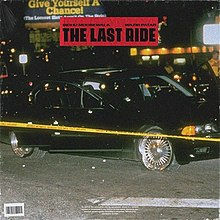
Then May 29th came around. Over the following days, tributes poured out after the shocking killing from damn near everyone, even from areas where you may not expect it. Nigerian artist Burna Boy cried on stage remembering Moose Wala, and later revealed that the two were working on a mixtape together. Canadian megastar Drake paid tribute to the Punjabi singer on his Instagram, and the night of the release of his album Honestly, Nevermind, he played Sidhu’s songs on the debut episode of his radio show. Fellow Canadian star Nav revealed that there were plans for a collaboration with Sidhu and Drake to be recorded, and other collaborations were reportedly planned with Rick Ross and Swae Lee. Details around his death began to become clearer: he was driving to an aunt’s house when his car was ambushed and multiple rounds were fired into his car by unidentified assailants: he had 19 bullets fired into his body. It looked as though he hadn’t gone out without a fight. He had a bulletproof car but wasn’t using it. His security detail had been withdrawn by the Punjab government the day before, and he wasn’t traveling with his 2 remaining personal bodyguards. While investigations are still ongoing, it appears that gang leaders Lawrence Bishnoi and Goldy Brar may have put a hit on him; given the speed of the investigation, the timing of the killing Sidhu’s public image, and past tactics, many are convinced the Indian government is behind the murder, either directly or through the gangs. It would certainly not be out of character for them to kill a rising Sikh star before they attract international attention. As time goes on and given recent developments in Sikh communities in Punjab and Canada, the likelihood of this increases day by day to the point where it is almost a foregone conclusion. His grief-stricken family made the funeral rites fairly public so people could see the pain and impact of his passing. His second last song was “The Last Ride”, where he paid tribute to his idol Tupac Shakur, with the art for the song being the car Tupac was shot in and the lyrics talking about dying young just as you’re on your way up. Sidhu was killed under eerily similar circumstances just a couple weeks later.



I initially didn’t think I cared that much when I first heard of his death, but as time went on I realized I did, enough that I am writing this almost 2 months (now over a year) after his murder. Sidhu, like a lot of other Punjabi artists right now, seemed to engage in “jatt superiority” and gun glorification, but he was also passionate about Punjabi and Sikh culture and helped instill that pride in his listeners. Sure his flows could get repetitive sometimes, but he combined an instantly recognizable old-school voice while helping bring hip-hop production back to the mainstream Punjabi industry. Sidhu and his music helped me connect to a different part of my culture, and helped me take some pride in it at a time when I incorrectly dismissed all Punjabi music as “too cheesy.” His socially conscious tracks are some of the most accessible yet powerful and nuanced tracks I’ve heard. When his family posthumously released “SYL”, it became abundantly clear just how much potential was lost, and a weird mix of anger, sadness, and pride wells up, both due to the subject of the song and the fact that not only was he taken from us but also his success and potential. (Jasjit Singh of Baaz has an absolutely amazing analysis on the song here that I encourage people to read) He used his powerful and angry voice to raise awareness and maybe help some youth channel their frustration towards growth, so much so that the Indian Government banned the song when it became the #1 trending song on YouTube. As of the final rewriting of this piece, there have been 3 more releases: “Vaar”, another powerful history based song focusing on General Hari Singh Nalwa sung and produced in the style of a Sikh dhaadi vaar, British producer Steel Banglez’s “Mera Na” tribute song with Burna Boy, and Mumbai rapper Divine’s “Chorni”. All of this makes sense too; he was only 28 years old with a 5 year career who was reaching his peak after some very public controversy and a clear interest in politics and society. His maturation was organic and on its way, tragically stopped in its tracks to a great loss for the music and maybe even the Sikh and Punjabi communities.

Similar feelings arise when I see that he was on the brink of bigger international collaborations and fame, potentially bringing the entire Punjabi industry to another level commercially, similar to how the Latin American music industry is. Think about how Punjabi music could be more accessible to the world with established stars like Drake and rising stars like Burna Boy endorsing it, while still keeping it true to its roots! In the year between these drafts, Diljit Dosanjh has performed at massive music festival Coachella and has upcoming collaborations with many international artists on the way. Whether it was street life that caught up with him, the Indian government deciding not to tolerate him and eliminate him before he achieved international fame, or both, the fact is that Sidhu Moose Wala’s death is a tragedy; a serious loss to the music industry, and a great loss of potential. Of course he will be either overly glorified or villainized to no end, but I encourage people to remember both sides of him in a more nuanced way. His father says he will slowly keep releasing some songs from the vault, and I look forward to those. (Author's note: I honestly thought this section would be the biggest of the article as I currently have the most personal thoughts about this part of his journey, but it seems like I can’t really get them out. Hopefully this ‘essay’ as a whole expresses some of that.)


I may have had an on-and-off relationship with his music, but I know I will continue enjoying it for the foreseeable future even though Sidhu himself is gone. I’m angry and sad that he’s gone and that it happened so suddenly, so violently, and by destructive elements of Punjabi society like gangs (the government is included in that group). Often it feels like before many Sikh figures who care about where they came from have a chance to make change, they are jailed, killed or silenced, and that frustrates me to no end. I’m happy and sort of proud that he was able to make such a mark in just 4.5 years, and that he was on his way to even bigger arenas. I don’t know how many videos I have with friends singing and dancing to his music, and it hurts knowing that we may not be able to do much of that for too much longer. I’m curious to see whether rising artists like the Channi Nattan and Inderpal Moga duo, Shubh, Tegi Panu, Sukha, or Raf Saperra can fill a gap and contend with Sidhu’s contemporaries like Karan Aujla, AP Dhillon and Amrit Maan and be noticed by established older stars like Diljit Dosanjh, Ammy Virk, or Amrinder Gill. I wanted to outline his career while also showing what he and his music meant and continue to mean to me personally, which I never thought would be enough to write pages about. To end this word-dump, I want to say that through the rights and the wrongs, the highs and the lows, we can remember him with what Moose Wala would repeat at the start of his songs: dil da ni madda, tera Sidhu Moose Wala (he ain’t bad at heart, your Sidhu Moose Wala).
Below is a list of some of Sidhu Moosewala’s songs with YouTube links attached, in roughly chronological order. I’ve enjoyed these at one point and/or they have significance to his career, and I encourage you to give them a listen, whether you’re Punjabi or not. (Admittedly a lot of the fun with him is in understanding lyrics, but it’s not necessary). Bounce around the list and listen to some of his different phases in his short career. You may find some good tracks for your playlists:


Comments